How to get to Corsica in 2026: our complete guide
Coming to Corsica is always an exciting moment; most of the time, you come for a stay or a holiday, and the journey is an integral part of the moment you’ve all been waiting for. And that’s why, in 2026, several new developments are worth knowing to help you prepare your trip properly.
Whether you prioritize comfort, cost, environmental preservation or freedom of transport, this guide sheds light on the different options for reaching the Island of Beauty.
The 2026 novelties to know for getting to Corsica
The eco-friendly highlights, promotions, booking early
The year 2026 for getting to Corsica marks the upcoming arrival of the Capu Rossu, a new-generation mixed ferry chartered by Corsica Linea, with partially LNG (liquefied natural gas) propulsion. This vessel aims to reduce the environmental impact of crossings while increasing transport capacity.
On the other hand, Corsica Ferries continues to modernize its fleet and services, strengthening links between the mainland and Corsican ports (Ajaccio, Bastia, Calvi, etc.). “Escapade” promotions are regularly offered, with discounts of up to 30% on crossings for passengers, vehicles and cabins.
These developments reinforce the importance of booking early, comparing offers between companies (Corsica Ferries, Corsica Linea, etc.), and consciously choosing the formula that best suits your priorities (time, cost, ecological impact).
The plane option for getting to Corsica: speed and constraints
The plane remains the most direct option for reaching Corsica, especially for short stays or solo travel. The main Corsican airports are Ajaccio, Bastia, Calvi and Figari. Several airlines serve these runways from major French or European cities, positioning themselves on summer tourist demand.
The advantage is the time saved: a direct flight from the mainland to Corsica lasts about one to two hours, depending on the origin. On the other hand, the major drawbacks remain local logistics, cost and environmental impact. Once you arrive, you will also need to either rent a car or rely on local transport, which is often limited outside urban areas.
The ferry: for getting to Corsica, embark on a maritime adventure
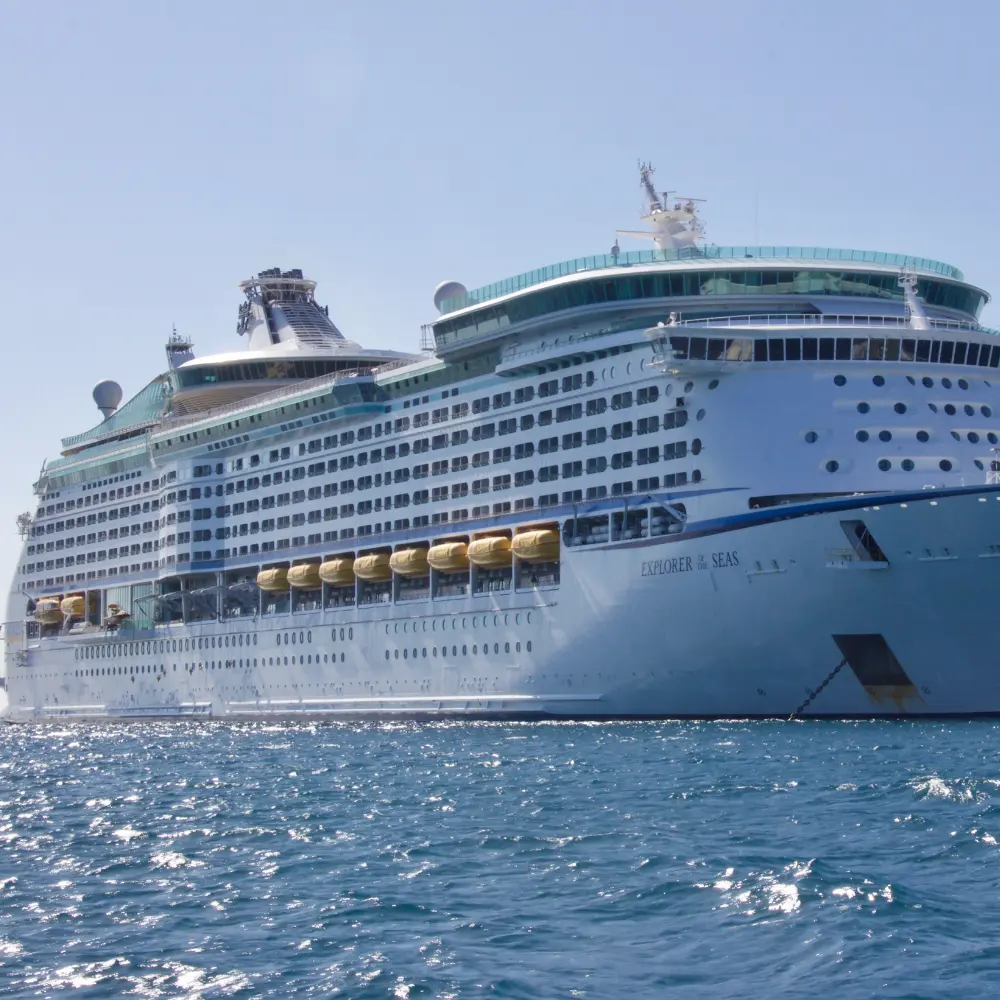
For those who want to bring their vehicle, experience the crossing or simply maximize their flexibility, the ferry remains a serious contender. Corsica Ferries offers a wide choice of crossings from France to Corsica, from Toulon, Nice, and Italian ports such as Savona or Livorno, with day or night options.
The big advantage: bringing your own vehicle, with no baggage constraints, nor any constraints if you want to come with your dog. If you come with your dog or cat, you will find areas for them on the outdoor decks of the ship. On board, you can enjoy cabins, relaxation areas, dining, and start your trip in a maritime atmosphere.
However, the duration is longer than a flight, and fares vary depending on the time (day, night), the cabin, the vehicle. The “Escapade” offers and Corsica Ferries promotions are a good opportunity to save money.
The ferry option for getting to Corsica is often perceived as more environmentally friendly, especially for families or groups of travelers bringing a vehicle, knowing that a combined train + ferry trip can offer a more favorable carbon footprint than a flight alone.

Which option according to your situation?
If you are traveling alone and especially if you don’t have a car, for a short stay, the plane + car rental can be optimal. If you are traveling with family, with luggage or a vehicle, the ferry makes perfect sense. If you are mindful of your ecological footprint, opt for a sea crossing and, if possible, embark with a well-loaded vehicle (more passengers per vehicle reduces emissions per person).
To make the most of your trip, you can combine modes: flight + local network, ferry + train, or ferry + car depending on your itinerary, your options and your availability.
Once you arrive in Corsica, what do we do?
That will very likely be the next question: what can we do in Corsica, what can we see? In this case, I’ll let you consult, via the little blue button below, the article on “What to do for a holiday in Corsica in 2026?”
Arrival & logistics in Corsica
Once you arrive in Corsica, whether by boat at Bastia, Ajaccio, Porto-Vecchio or by plane at one of the island’s four airports, it is advisable to organize your travel in advance. The car remains the most practical way to explore the island. The main rental agencies (Europcar, Hertz, Sixt, Ada, Rent a Car, etc.) have counters directly in Corsican ports and airports.
For travelers without a vehicle, an intercity bus network connects the main cities (Bastia, Corte, Ajaccio, Porto-Vecchio, Calvi), as well as several seaside resorts. However, frequency and schedules vary greatly depending on the season. Taxi and local shuttle services complete the offer, especially around major tourist areas.
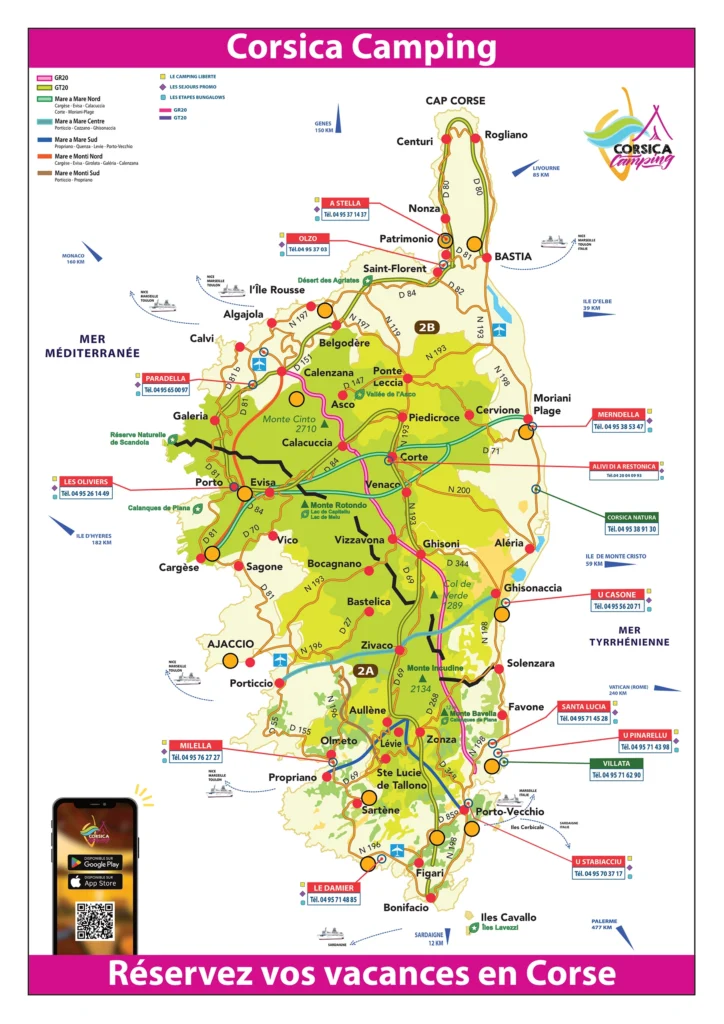
The campsites of the Corsica Camping group are spread across the whole island. Moreover, if you don’t want to stay stuck in one place, the “En toutes libertés” pass allows you to travel by van or motorhome and move freely between partner campsites, without a fixed reservation, while enjoying adapted services (water, electricity, sanitary facilities). For those who prefer an itinerary with all-comfort accommodation, the “Étapes en Mobil-Home” formula offers an organized circuit between several campsites, with equipped accommodations and a flexible stay. I’ll show you on this map where the campsites of this independent group are located:
FAQ – How to get to Corsica in 2026
Conclusion
Coming to Corsica in 2026 remains a moment of choice. Whether you opt for the plane or the ferry, the essential thing is to choose according to your priorities: speed, budget, vehicle or environmental impact. With new developments such as the Capu Rossu soon in service and the commercial offers from Corsica Ferries, the options are more numerous and more responsible.

Do you know why Corsica is called the Island of Beauty?
Corsica has been nicknamed the Island of Beauty since the 19th century, due to the richness and diversity of its landscapes. Nowhere else in the Mediterranean can you find such a concentration of paradise beaches, wild mountains, preserved forests, fragrant maquis and secret coves.
Several means of transport allow you to get there quickly and at low cost, whether by ferry or plane. In just a few hours, you leave everyday life behind for a true change of scenery, with that very special charm that has made Corsica famous.
If this article has made you want to know more, don’t hesitate to check out the site’s blog: Head to the Blog to prepare my trip! There you will find ideas, tips and inspiration to organize your next holiday in Corsica, as close as possible to this preserved nature, and enjoy everything this island has to offer.